
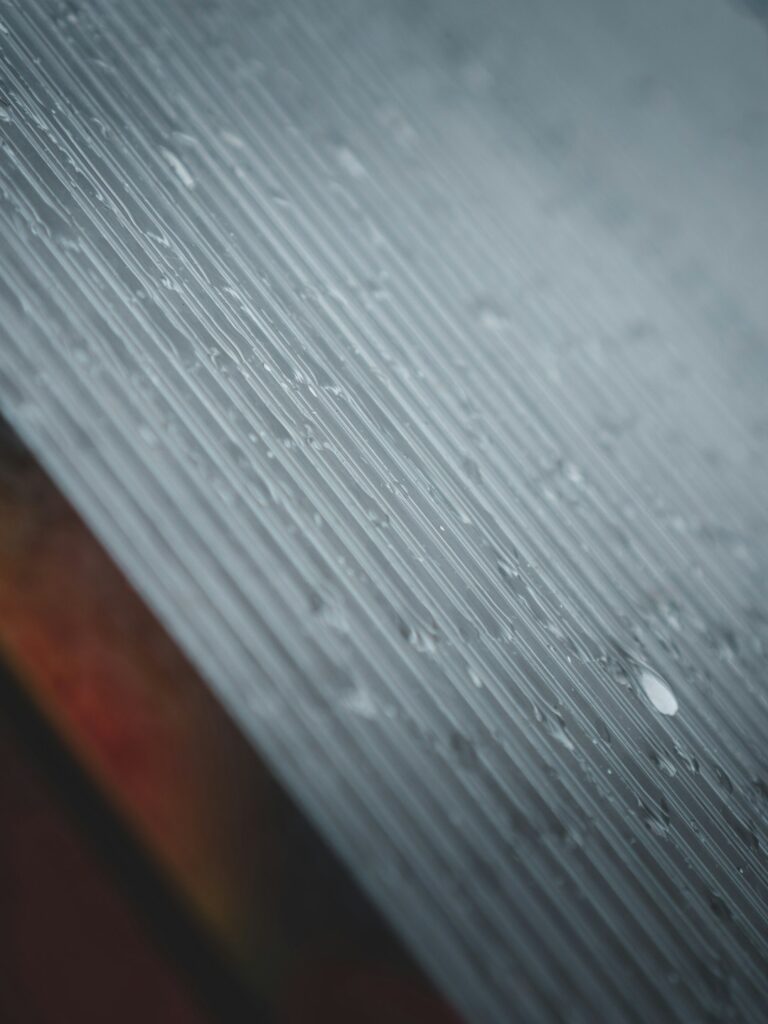
Rain can sound surprisingly loud indoors, especially beneath a metal roof, over an unconditioned attic, or in rooms directly below broad roof sections. The noise is usually caused by a combination of roof material, attic construction, insulation, ceilings, gutters, and the intensity of the storm.
Most solutions do not involve a single soundproofing product. The quietest results usually come from reducing vibration at the roof, absorbing sound in the attic, and limiting the way noise travels through ceilings and framing.
Why does rain sound louder on some roofs?
Roof material is the first major factor. Thin metal roofing tends to transmit the impact of raindrops more clearly than asphalt shingles because the metal surface can vibrate. The sound may become more noticeable during heavy rain, sleet, or freezing rain.
Asphalt shingles usually create less sharp impact noise because they are made from layered materials with a textured surface. However, shingles do not eliminate rain noise. If the roof deck is thin, the attic is unfinished, or the ceiling below has little insulation, rainfall can still be clearly heard.
Other factors that affect indoor sound include:
- Whether the roof is installed over solid roof decking
- The distance between the roof deck and the ceiling
- The amount and type of attic insulation
- Whether the ceiling is drywall, plaster, or another material
- Openings around attic access panels, recessed fixtures, and vents
- Gutters or downspouts positioned near bedroom walls
- The roof slope and the size of the roof surface above a room
In older homes, sound may also travel through framing more easily because ceilings and wall assemblies were not always designed with modern acoustic control in mind.
Can attic insulation reduce rain noise?
Yes. Attic insulation is often one of the most practical ways to reduce the sound of rainfall beneath a roof. It works by absorbing some of the sound energy in the attic space and reducing the hollow, echoing quality that can make storms seem louder.
Loose-fill and batt insulation can both help, although the result depends on installation quality and the overall ceiling assembly. Insulation should be distributed evenly and should not block soffit vents or other required ventilation paths.
For homes in cold, snowy climates, attic insulation also serves an important thermal purpose. A properly insulated attic can reduce heat loss, help limit ice-dam risk, and improve indoor comfort during winter. Noise reduction is useful, but insulation should not be installed in a way that creates moisture or ventilation problems.
Particular attention may be needed around:
- Attic access doors or hatches
- Areas above bedrooms and living rooms
- Gaps around plumbing or electrical penetrations
- Thinly insulated sections near roof edges
- Knee walls and sloped ceilings
An attic hatch can act like a small speaker opening. Adding an appropriate layer of insulation to the hatch and improving its seal can make a noticeable difference without changing the roof itself.
Does a solid roof deck make a roof quieter?
A solid roof deck generally provides a more stable surface than widely spaced boards or a lightweight panel assembly. It can reduce some vibration and help create a more consistent base beneath the roofing material.
Roof decking alone, however, is not a complete soundproofing solution. A solid deck may still transmit impact noise if the roof covering is thin or if the ceiling below has little insulation. The greatest improvement often comes from combining a stable deck with insulation and a well-sealed ceiling.
If roof replacement or major repair is already necessary, the condition and construction of the roof deck should be evaluated. Adding materials solely for sound control may not be practical if the existing deck has moisture damage, inadequate fastening, or ventilation concerns.
Are metal roofs always louder than shingle roofs?
No. Metal roofs can be louder during rainfall, but the final sound level depends heavily on how the roof is assembled.
A metal roof installed over solid decking with insulation beneath it may be relatively quiet. A lightweight metal roof installed over an open framing system, with a large uninsulated attic below, is more likely to produce a pronounced drumming sound.
The interior ceiling matters as much as the exterior roof. Drywall, insulation, resilient channels, and separated framing can all reduce the amount of sound that reaches occupied rooms.
Metal roofing may also produce different sounds during sleet, hail, or freezing rain. Those sharper impacts can be more noticeable than ordinary rainfall. This does not necessarily indicate a roof problem, but sudden changes in sound may justify checking for loose panels, missing fasteners, or damaged flashing.
What ceiling improvements help reduce roof noise?
If the roof is in good condition but rain remains disruptive, improvements to the ceiling assembly may help. A heavier, better-sealed ceiling generally blocks more sound than a lightweight ceiling with gaps.
Useful approaches can include:
- Adding another layer of ceiling material where structurally appropriate
- Sealing gaps around light fixtures, vents, and attic access points
- Improving insulation above the ceiling
- Using vibration-reducing channels during a planned ceiling renovation
- Separating the finished ceiling from framing where a major remodel allows it

These methods are more involved than adding attic insulation and may not be necessary throughout the house. Focusing first on rooms where rain noise is most bothersome can be more practical.
Recessed lights deserve special care. Some fixtures require clearance from insulation, while others are rated for contact with insulation. Blocking ventilation or surrounding a fixture incorrectly can create fire or moisture hazards.
Can gutters and downspouts make rain noise worse?
Yes. Water falling into a gutter, striking a loose elbow, or rushing through a downspout can create a concentrated sound that seems louder than rainfall on the roof itself.
Downspouts located beside bedrooms or lightly framed exterior walls may be especially noticeable at night. Noise can increase if:
- A gutter is loose or has a sagging section
- Water drops from the roof edge instead of entering the gutter
- A downspout elbow is poorly aligned
- The outlet discharges onto metal, concrete, or another hard surface
- Leaves or ice cause water to back up and spill over
Keeping gutters clear and properly pitched can reduce unnecessary splashing. Downspout connections should be secure, and discharge points should direct water away from foundations without allowing water to strike a hard surface near occupied rooms.
Rain chains, decorative drainage features, and exposed metal downspouts may also create more sound than enclosed or well-supported drainage systems. Their appearance can be appealing, but they should be considered part of the home’s overall noise pattern.
What should residents check before adding soundproofing?
First, determine whether the sound is ordinary rain impact or evidence of a roof or drainage problem. A sudden new noise, rattling, dripping, or tapping in one location may point to a loose component, water entry, damaged flashing, or a gutter issue.
Look for signs such as:
- Water stains on ceilings or upper walls
- Damp insulation or musty attic odors
- Daylight visible around roof penetrations
- Loose metal panels, flashing, or gutter sections
- Persistent dripping after rainfall has stopped
- Peeling paint or swelling around ceiling fixtures
Repairs involving steep roofs, icy surfaces, damaged electrical components, or suspected structural problems can be hazardous. In those conditions, safety and moisture control should take priority over sound reduction.
Which approach usually works best?
For many homes, the most balanced sequence is to check drainage and roof components first, improve attic insulation and air sealing, and then consider ceiling upgrades only if noise remains troublesome.
The most effective solution depends on the roof design and the room below it. In a house with a metal roof and unfinished attic, insulation and ceiling sealing may provide substantial improvement. In a home with a finished cathedral ceiling, options may be more limited and may require careful attention to ventilation and moisture movement.
Seasonal weather also matters. Heavy summer thunderstorms, autumn downpours, winter sleet, and spring rain can produce different sounds. Observing when the noise occurs can help identify whether the source is the roof covering, attic vibration, gutters, or downspouts.
