
Is roof work safe for a homeowner to do?
Some roof tasks are reasonable for a careful homeowner, but only when the work is low-risk, the weather is stable, and the person can work from the ground or a properly secured ladder. Repairs that require walking on steep, wet, icy, fragile, or damaged roofing are not suitable for most do-it-yourself situations.
In Valatie, NY, changing weather adds another concern. Rain, frost, snow, wind, and heat can make a roof unsafe even when conditions looked manageable earlier in the day. A task that is simple in dry summer weather may become hazardous during spring moisture, autumn leaves, or winter freeze-thaw cycles.
The safest approach is to judge the entire situation—not just the repair itself.
Which roof tasks are usually appropriate for DIY work?
Low-level inspection and minor maintenance may be manageable if they can be completed without stepping onto the roof. Examples include:
- Cleaning leaves and loose debris from gutters while standing on a stable ladder
- Looking for visible damage from the ground or from an attic
- Replacing a missing gutter screen or adjusting a downspout
- Removing small amounts of moss from an accessible, non-steep surface using appropriate methods
- Sealing a minor exposed fastener only when the area can be reached safely
- Replacing a small section of flashing that is accessible from a roof edge or low-slope area, provided the roof surface is sound
Even these tasks require caution. A ladder should rest on firm, level ground, extend above the landing area when appropriate, and be secured against slipping. Three points of contact—two hands and one foot, or two feet and one hand—should be maintained while climbing.
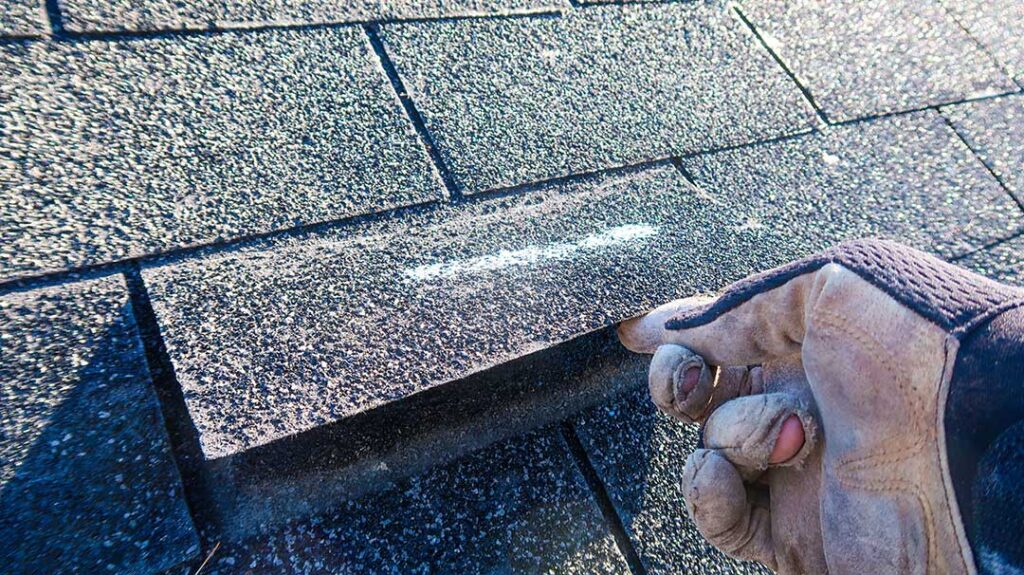
A roof should never be treated like a normal walking surface. Shingles can be brittle, granules can reduce traction, and hidden weak spots may exist around skylights, valleys, vents, chimneys, and previous repairs.
When should a homeowner stay off the roof?
A homeowner should avoid climbing onto a roof when any of the following conditions exist:
- Rain, frost, ice, snow, or heavy dew is present
- Wind gusts could affect balance or move ladders
- The roof is steep enough that standing comfortably is difficult
- Shingles are curled, loose, cracked, or covered with heavy granule loss
- The roof deck feels soft or appears sagged
- Moss or algae creates a slippery surface
- The work requires carrying bulky materials up a ladder
- The roof has several levels, limited footing, or an unprotected edge
- The person lacks fall-protection equipment and training
- There are overhead electrical lines near the work area
Moisture is especially deceptive. A roof can appear dry from the ground while remaining slick in shaded areas. North-facing slopes, roof sections beneath trees, and areas near valleys may stay damp longer than the rest of the structure.
Snow and ice should not be treated as a minor inconvenience. Even a thin frozen layer can eliminate reliable footing. Snow can also hide damaged shingles, weak decking, and roof edges.
Is a ladder enough protection?
A ladder provides access, not complete fall protection. It does not prevent a person from slipping after stepping onto the roof, nor does it protect against sliding down a steep surface.
Before using a ladder, check that:
- The feet sit on stable ground rather than soil, ice, loose gravel, or wet leaves
- The ladder is positioned at a safe angle
- The top is secured when possible
- The work area is clear of doors, vehicles, children, and pets
- Tools can be carried without forcing the body sideways
- Someone nearby knows that roof work is taking place
Avoid placing a ladder on top of boxes, buckets, lumber, or other objects to gain extra height. Extension ladders should not be used near overhead power lines. If the ladder must be moved repeatedly, the task may be beyond what can be done safely with basic equipment.
What weather conditions are safest?
The safest conditions for minor roof-related work are dry, calm, and moderate. The roof surface should be fully dry, and the forecast should allow enough time to finish without rushing.
Cold weather creates several problems. Shingles become less flexible and may crack when bent or lifted. Sealant may not bond properly at low temperatures. Gloves can reduce grip and dexterity, while frozen ground makes ladder placement less reliable.
Hot weather also has risks. Dark roofing materials can become much hotter than the surrounding air, causing burns, dehydration, dizziness, and softened asphalt surfaces. Work should be limited during the hottest part of the day, with frequent breaks and adequate water.
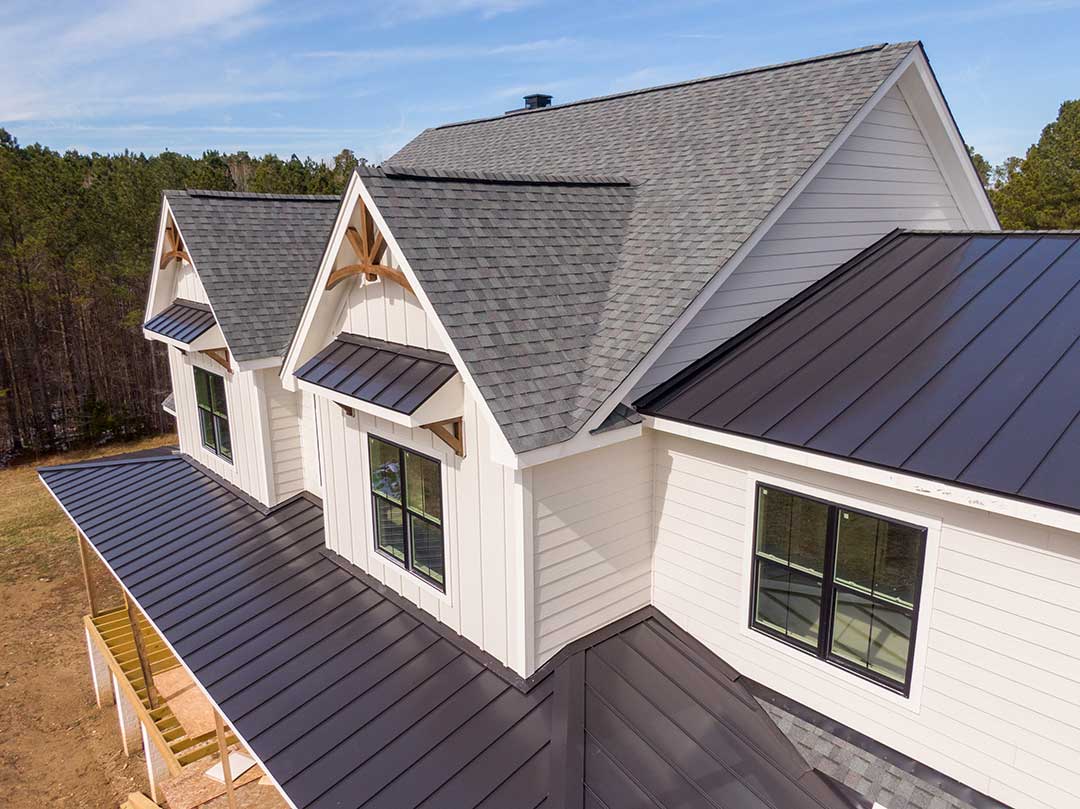
Wind deserves special attention. Gusts can shift a ladder, catch roofing materials, or affect balance near an exposed edge. A calm morning does not guarantee calm conditions later, so weather should be checked for the entire planned work period.
Which repairs should not be attempted casually?
Several roof problems involve more than replacing a visible shingle. They may affect structural stability, water management, ventilation, or electrical safety.
Extra caution is needed with:
- Sagging roof areas
- Leaks near electrical wiring or ceiling fixtures
- Damage around chimneys, skylights, or roof penetrations
- Large areas of missing roofing
- Rot in roof decking or framing
- Ice-dam damage
- Roofs with multiple layers of old roofing
- Structural damage after a fallen tree or heavy storm
- Suspected asbestos-containing roofing materials
- Work involving cutting, reshaping, or removing structural components
A leak inside the home does not always appear directly below the roof defect. Water can travel along rafters, insulation, wiring, and ceiling materials before becoming visible. Applying sealant to the first wet spot may conceal the symptom without stopping the source.
If a roof has structural damage, unsafe access, electrical concerns, or materials that may contain hazardous substances, do-it-yourself work can create greater danger and additional property damage.
How can someone inspect a roof without climbing onto it?
A ground-level inspection can provide useful information. Use binoculars to look for missing or displaced shingles, exposed underlayment, damaged flashing, sagging lines, and clogged gutters. Check the attic for daylight through the roof deck, damp insulation, staining, mold-like growth, or fresh water marks.
After rainfall, inspect ceilings and upper walls for new discoloration. Also look around windows, chimneys, vents, and attic penetrations. Photographs taken from the ground can help track whether a suspected problem is changing.
Do not use a drone near power lines, airports, or neighboring property without understanding applicable rules. A camera mounted on an extension pole may provide a safer view for some low-level areas, but it should not be used while standing on an unstable ladder.
What should happen after a storm?
After strong wind, hail, or a fallen branch, begin with a ground-level assessment. Look for loose roofing materials in the yard, damaged gutters, exposed wood, hanging branches, and displaced flashing. Stay away from downed utility lines and areas where the roof structure appears unstable.
Temporary measures may be appropriate only when they can be completed safely from the ground or from a secure, low-risk location. Do not climb onto a storm-damaged roof to place a tarp if the surface, structure, or weather makes footing uncertain. Tarps can also become dangerous in wind if they are not properly secured.
For residents in the area, seasonal maintenance is often safer than emergency roof work. Clearing debris before winter, checking attic ventilation, and keeping gutters functional can reduce the chance that a small issue becomes urgent during snow, ice, or heavy rain.
A simple decision test
Before doing roof work, ask:
1. Can the task be completed without stepping onto the roof?
2. Is the surface completely dry and free of ice, snow, moss, and loose material?
3. Is the roof low-slope, stable, and easy to access?
4. Can tools and materials be handled without overreaching?
5. Is there no nearby electrical hazard?
6. Is the weather expected to remain calm for the entire task?
7. Is there a safe way to stop immediately if conditions change?
If any answer is no, postponing the work or using someone with the proper equipment and training is the safer decision. A minor maintenance job is not worth a fall, an electrical injury, or hidden structural damage.
